Garage Door Off Track Repair in Williamsport, PA
Off-track doors are first held steady, then coaxed back into the rails and rehung on true track fitted with sound rollers. Whatever knocked the door out gets fixed so it stays put.
A garage door in the Williamsport area is off track when rollers have jumped the rail, the door sits crooked or jammed, or a panel has bowed where it snagged. Stop using it right away, and keep the opener off.
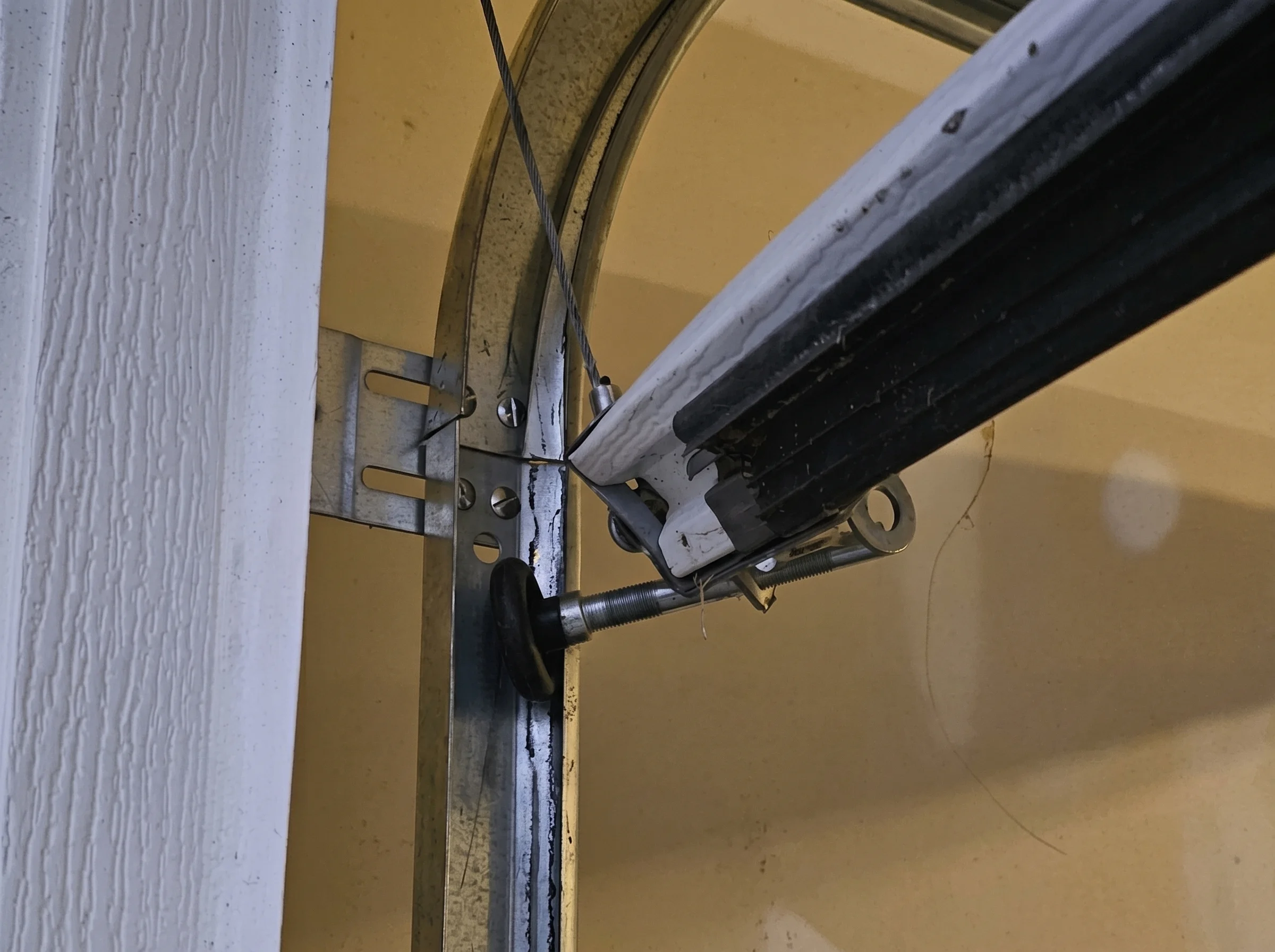
Signs of a door off its track
Rollers resting outside the rail, generally near the bottom of the door or at the curve where the track bends upward to meet the ceiling.
A tilted or wedged door, frequently stuck halfway up.
One panel creased or bellied after the opener kept pushing on a stuck door.
Rails dented, kinked or peeling away from the wall.
Grinding, popping or scraping sounds as it travelled, just before it came out.
Off the track? Don't touch the opener, and note which side came out and what led to it.
Contact UsWhat pushes a door off track
A bump from a vehicle
Backing the car into a closed or half-open door is the usual culprit, and the lower stretch of track often bends as well.
Cable has snapped or jumped
A dropped side twists the door and pushes rollers out of the rail. If a cable is the culprit, cable repair picks up from there.
Rollers worn or broken
A roller whose bearing has failed drags instead of rolling and hops out at the first rough spot.
Track bent or loose
Brackets loosen from vibration, and with highs at or below freezing on about 29 days a year, winter adds strain until a roller slips out.
An obstacle in the way
A bin, bicycle or mower left in the path of a closing door, particularly when closing force is set too high.
Secure the area
Leave the opener off
It will keep shoving, bending panels or pulling the track off the wall.
Don't pull the emergency release with the door partway up and out of its track; it may fall or swing loose of the rails.
Don't force rollers back with a hammer while the door is under load. It still holds spring tension, so it may shift suddenly and without warning.
Stand clear of the door, and if a car is shut inside, lead with that when you call.
Repair, step by step
The door gets braced so it can't fall or creep during the job, and any spring tension is taken care of first.
The damage gets surveyed
How many rollers, how much track and which panels are damaged, and whether a cable or spring was the trigger.
Track is trued or replaced
Minor bends get straightened out; kinked or ripped track is swapped for new.
Rollers that are worn or broken get swapped, and hinges are inspected, because a cracked hinge sends a roller out again.
The door goes back into the rails, brackets get tightened, and it runs through full open-close cycles on the opener, with force and travel limits checked again afterward.
Tell us how the door failed
Two lines on what happened are plenty to start with. No part names are needed to get going.
Rollers
Rollers decide how smooth and quiet a door runs, and with about 36 inches of snow a season they tire well before the door.
Bearing-free steel rollers are the entry level. They're loud and wear the track along with themselves.
Nylon rollers with sealed bearings run much quieter and need little or no lubricant at all.
Wobbling, flat spots, cracks in the wheel or seized bearings tell you a roller is due.
A noisy door that hasn't actually broken usually needs little beyond a fresh set of rollers, and a maintenance visit normally covers that.
What affects the off-track repair bill
How far it came loose
Two rollers out at one corner, or the door hanging free.
Track damage
Whether sections are straightened or replaced, one side or both.
Rollers and hinges that must be swapped.
Bent or cracked panels
A deeply bowed panel may have to be replaced, and finding a match for an older door can be a challenge.
A cable or spring that gave way first, triggering it.
When panels can't be saved
Heavy impact can fold panels past the point of straightening. You can often replace one panel and keep the others, but only if that panel is still in production and matches the rest of the door.
Several panels hurt, or no match to be had? Garage door installation walks through replacing the door.
Common questions
Could I tap the rollers back into the rail myself?
Only when a single roller has slipped out near the floor of a closed door and the track and cables look fine. In any other case, don't try: the door is heavy, spring-loaded and prone to shift without warning, and the springs hold real tension.
Why is it always the same side that derails?
Typically a track that sits slightly crooked, a bracket that has come loose, or a cable on that side that's out of adjustment. Hanging the door back up without fixing that cause means a repeat.
Is oiling the tracks a good idea?
No. Leave them clean and dry, since oil in the track picks up grit. Lubricant belongs on roller bearings, hinges and springs.
Other garage door work
Garage Door Cable Repair
Fraying, snapped or unseated cables, and a door that sags to one side.
Read more →Garage Door Spring Repair
Failed torsion or extension springs, replaced with springs rated for what your door weighs.
Read more →Garage Door Installation
Doors in steel, wood, composite or glass, cut to the width and height of your opening.
Read more →Contact us
Describe where the door stopped, which side came out, what hit it and whether a cable looks slack.
A photo of each side taken from a few feet back helps most. Check a contractor's registration via the Pennsylvania Department of Labor and Industry.